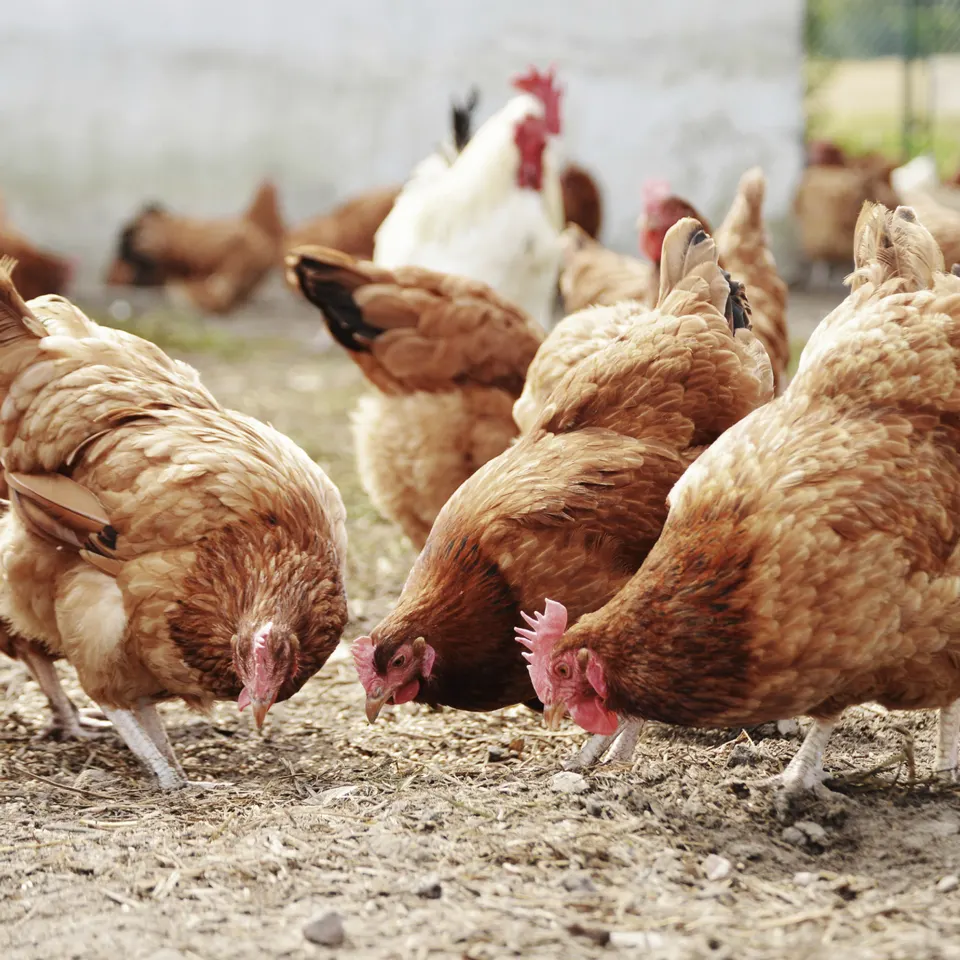
Only about 1% of animals are raised on small-scale farms. Although they may be treated a little better, the reality is that on local family farms and “humane” or “organic” farms, animals are separated from their mothers when only a few days old, mutilated without painkillers, bred to grow abnormally fast and cruelly killed at a very young age. Hens on “cage-free” egg farms spend most of their lives crowded into sheds, and their beaks are often cut off without painkillers. They are killed at just 18 months old, and male chicks are gassed or ground up alive just days after being born. We would never treat dogs or cats this way.
Animal product companies have resorted to using different misleading terms and labels to take advantage of consumers' “good intentions” and make them believe these products come from animals that were “raised humanely.” Such labels show false information and idyllic images of animals raised on traditional farms.
Many consumers believe the terms “cage-free,” “farm-raised” and “pasture-raised” are synonyms for “cruelty-free.” This is not true. In fact, these and many similar terms are not regulated or properly defined. For example, eggs with these kinds of labels come from hens who also suffer stress and fear during handling and transport to the slaughterhouse. They normally travel long distances to reach the slaughterhouse, and during that time they remain confined in transport trucks, deprived of food and water. Since males are of no use to the egg industry, they are suffocated or ground up alive within hours or days of being born. Hens are killed as soon as their laying ability declines, which typically happens when they reach 18 months of age.
The USDA organic certification sets no relevant requirement for the welfare of animals raised for food. Organic certification only refers to the feed the animals eat and the use of growth hormones and antibiotics. Animals raised under these rules are subject to the same conditions of stress, suffering and fear as any other animal raised for food. A clear example is the fact that the young are separated from their mothers almost immediately after birth.
Animal product companies know that consumers are increasingly aware of the cruelty involved in raising animals for human consumption. They believe that by using misleading labels and images of healthy, happy animals on the packaging, they can counteract this negative image.
In the end, all animals raised for food end up being slaughtered when they stop being “profitable.” This unavoidable fate is the ultimate expression of a thoroughly inhumane process. The only way you can be sure you are not contributing to the unnecessary suffering of these animals is to adopt a vegan lifestyle.