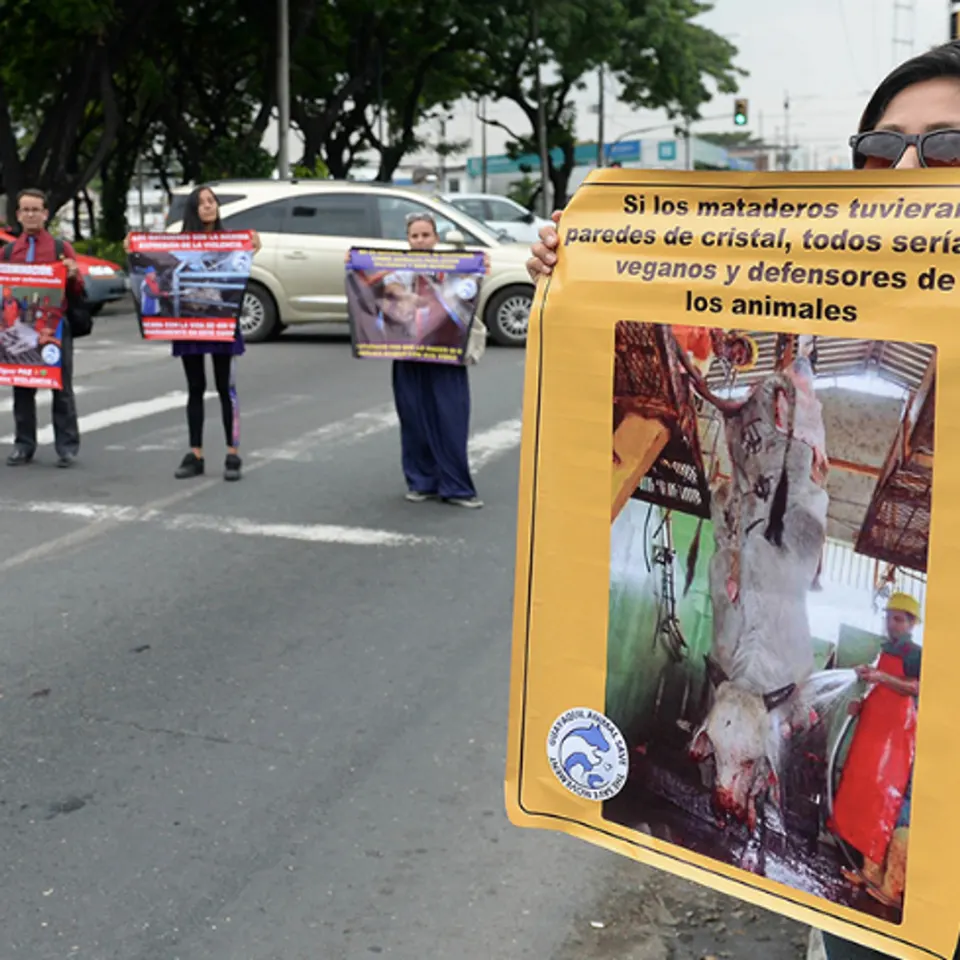
A mathematical analysis shows that avoiding deforestation requires a planetary change in dietary habits. Veganism saves forests.
You cannot have it all: organic farming, extensive livestock raising, leaving forests as they are, and eating meat the way we do. You have to choose. Of all these factors, the most important is diet. The latest mathematical model, developed by Karl-Heinz Erb and his colleagues at the Institute of Social Ecology in Vienna, compares 500 possible scenarios for feeding the world in 2050 and shows clearly that, if we do not want to destroy more forests, extending the current Western diet to the whole planet is unsustainable. The best way to save trees is not to stop buying books, but to become vegetarian.
The good news is that there is no need to turn more forests into farmland to feed the world over the next three decades, even though the population will keep growing. Two thirds of the 500 possible scenarios are viable without destroying a single more hectare of forest. “Deforestation is not a prerequisite for supplying the world with enough food in 2050, in terms of both quantity and quality,” says Erb. But that requires adopting certain concrete strategies on agriculture, livestock, emissions and diets. Leaving things to run their course is not an option, according to the results presented in Nature Communications.
For example, it is not even impossible to export the massively meat-heavy diet of Western countries to the rest of the world, but that would require crop yields to grow massively too, and a strong expansion of farmland at the expense of the pastures now used for livestock. That is, the practical elimination of organic farming and extensive livestock raising, two high-quality but low-yield practices. Having the best of all these worlds requires a severe cut in hamburgers.
Some numbers on the 500 scenarios examined in the model (all of them without further deforestation, remember): 100% of scenarios are viable if the entire world population becomes vegan; 94% are if the relatively looser lacto-ovo vegetarianism is adopted; two thirds if the average diet stays as it is today; and only 15% if the planet adopts the current Western eating pattern, based on nonstop meat. A simple reading of these figures is that it is wise to eat less meat. The less, the better for the forests.
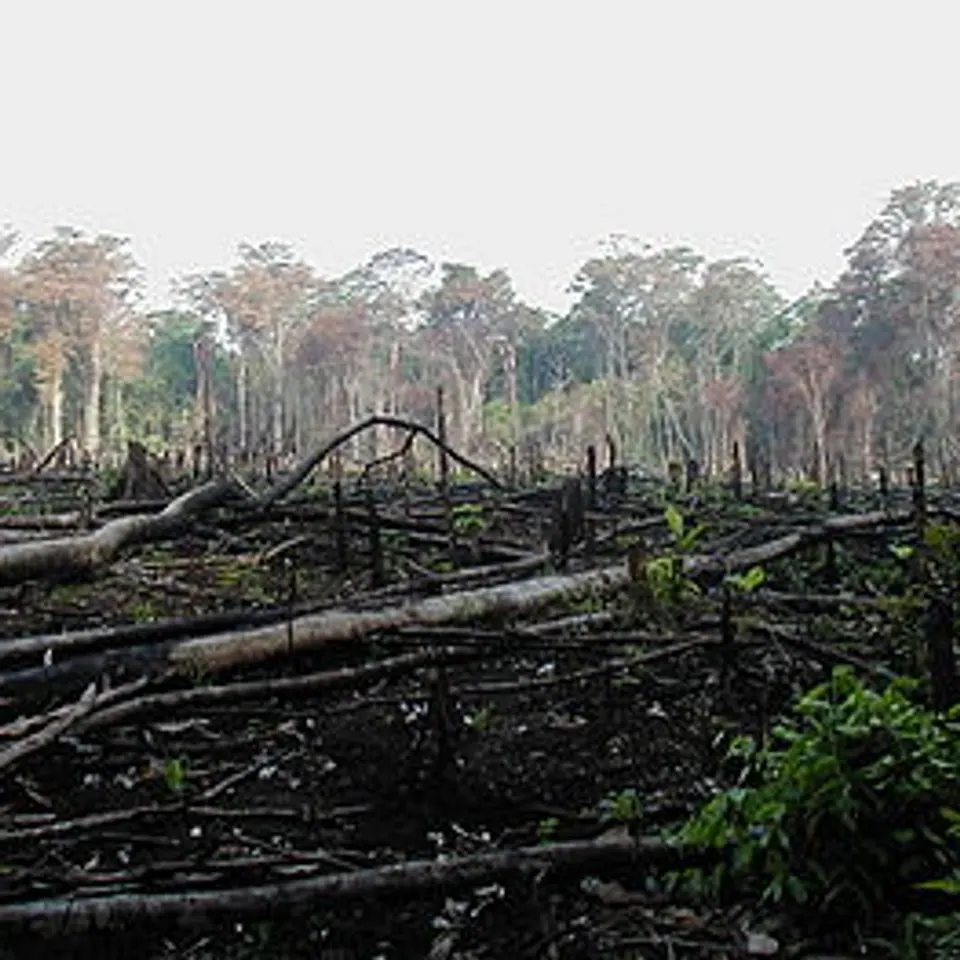
Stopping deforestation from continuing is a priority goal for very solid reasons. Per unit of area, forests store more CO2 (that is, they remove more greenhouse gases from the atmosphere) than any other type of plant cover, natural or agricultural. They also harbor a large share of terrestrial biodiversity. Agriculture has already taken a lot of area from forests, and it keeps doing so, especially in tropical latitudes.
Three quarters of the ice-free land surface is now used for farming or livestock. This appropriation of nature is necessary to feed people and livestock, but it has major environmental trade-offs, such as eutrophication (massive input of phosphates and other inorganic nutrients into the ecosystem, with the resulting colonization of fresh water by algae), pollution from fertilizers and by-products, serious losses of biodiversity, and gas emissions that worsen global warming.
Not all futures are possible. Eat less meat.