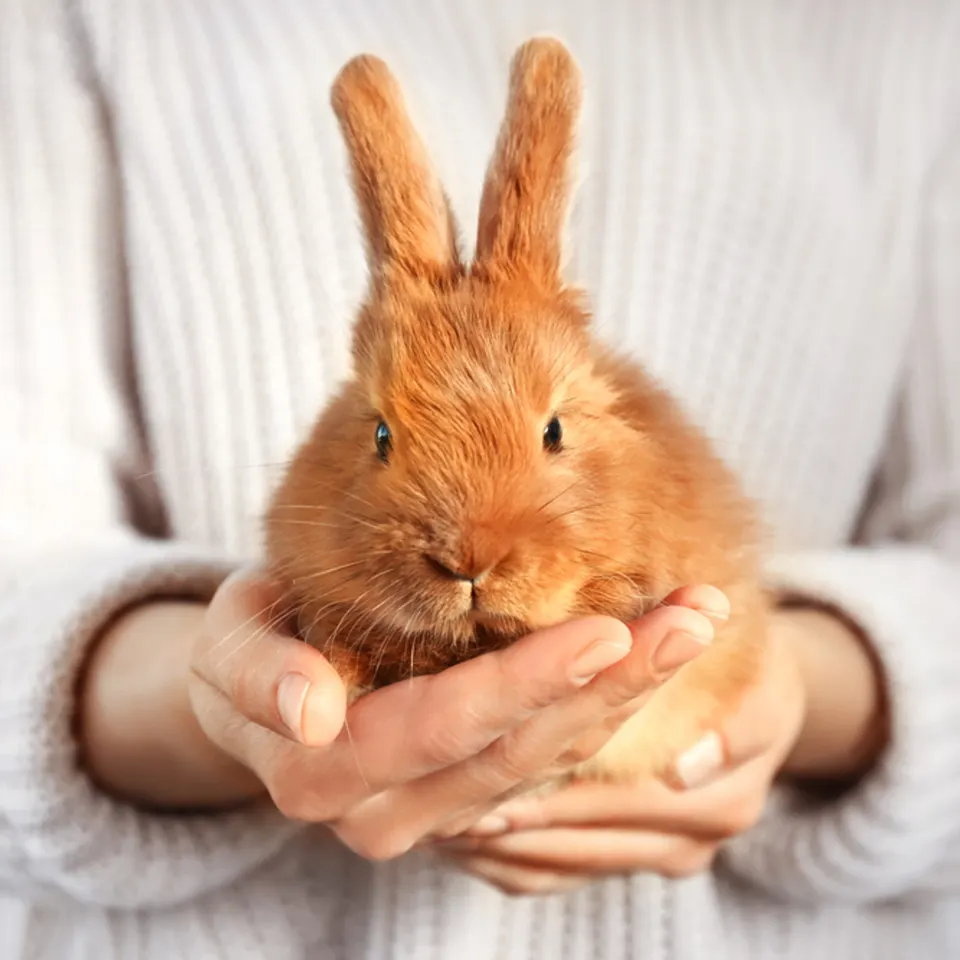
A simple icon can be used as a marketing tool to suggest that a company is committed to compassionate and responsible practices, encouraging interested consumers to feel comfortable buying its products.
We must investigate the icon and know exactly what it means, since some companies still use little bunnies or "natural" icons to show that they have a policy on animal testing, but this may be nothing more than appearance.
Not just any rabbit or icon means Cruelty Free, and the difference between these forms of representation (text, seals, logos) seems to be the following:
Official logos:
Official logos are those certified by one of the representative organizations. They ensure that the final product has not been tested on animals and that the ingredients have not been tested on animals either.
'PETA' logo:
The logo of the bunny with pink ears signifies a promise from the company that neither the ingredients nor the final product have been tested on animals, whether by the company or by a contracted laboratory. The company gives its word, but no proof is required and there is no opening of the supply chain to an independent audit. Oversight is carried out by people who fight for the ethical treatment of animals.
According to PETA, companies must complete a short questionnaire and sign a statement of assurance confirming that no animal tests are carried out or paid for on ingredients, formulations or final products, and committing not to do so in the future. This agreement is therefore based on trust, with companies putting their integrity on the line.
"CHOOSE CRUELTY FREE" logo:
The Choose Cruelty Free (CCF) bunny logo indicates that the product is certified by an independent, nonprofit organization that promotes a cruelty-free lifestyle among consumers. To become a CCF-accredited cruelty-free company, a questionnaire must be completed, including a legally binding contract. Once accredited, companies can choose to hold a license to use the CCF rabbit logo for an annual fee.
As for the accreditation criteria, both the manufacturer of the products and all related companies (where applicable) must meet one of the following criteria: A) The never-tested rule: None of their products and none of the product's ingredients may ever have been tested on animals.
B) The five-year rule: None of their products and none of their products' ingredients have been tested on animals within a period of five years immediately before the date of the accreditation application.
CCF also has a strict policy on animal-derived components. Likewise, it will not accredit a company unless all of its parents and subsidiaries (the company the brand belongs to, etc.) are also accredited.
"IHTK" logo:
The logo of a rabbit under a protective hand tells us that the product is certified by the German organization IHTK (Internationaler Herstellerverband gegen Tierversuche in der Kosmetik; "International Association of Manufacturers against Animal Testing in Cosmetics"). This is an NGO, founded in 1881 as a coordinating organization for animal protection groups and animal shelters in Germany, in order to confront animal abuse more effectively.
"THE LEAPING BUNNY" logo:
This is the most rigorous logo for companies. It indicates that neither the ingredients nor the final product have been tested on animals, whether by the company or by a contracted laboratory. In addition, the company must open its entire product chain to an independent audit and must promise to stop animal testing after a set date.
It therefore appears that this logo offers the most assurance that the company meets rigorous humane standards, showing that its products and ingredients are not tested on animals at any stage before the product reaches the market.
"V" logo:
On some of our cosmetics packaging we can find the letter V or the text VEGAN printed on it. This generally happens when the product also carries one of the official bunnies indicating that it is Cruelty Free. With this letter we are also assured that the product is 100% vegan, since its ingredients contain no animal derivatives, such as milk or honey.
Unofficial logos:
Unofficial logos are those that apparently do not carry certification from any representative organization. All this ensures is that the company does not test on animals, but we do not know whether it checks that the ingredients of its products have not been tested on animals, whether by the company, a contracted laboratory or its suppliers. Nobody oversees the process. In fact, some people call this kind of labeling (along with the previous kind) "not meaningful" and add that it can be "potentially misleading to consumers."
That said, when a company has a logo different from the official ones, it does not necessarily mean it tests on animals either, but we do need to dig a little deeper to find out what is really going on, without forgetting that some logos vary by country.
Not tested on animals:
This can mean anything. A simple "Not tested on animals" might only reflect that criterion being applied, perhaps only recently and only to the final product. That means they not only fail to check whether their ingredients may have been tested on animals, but their suppliers and/or contracted laboratories may have run animal tests. This is because there is no general oversight or regulation of the use of words such as "Not tested on animals," "No animal testing" or "Cruelty free," so we cannot know exactly what they mean, and perhaps the company's answer about its corporate policy will only tell us what we want to hear.