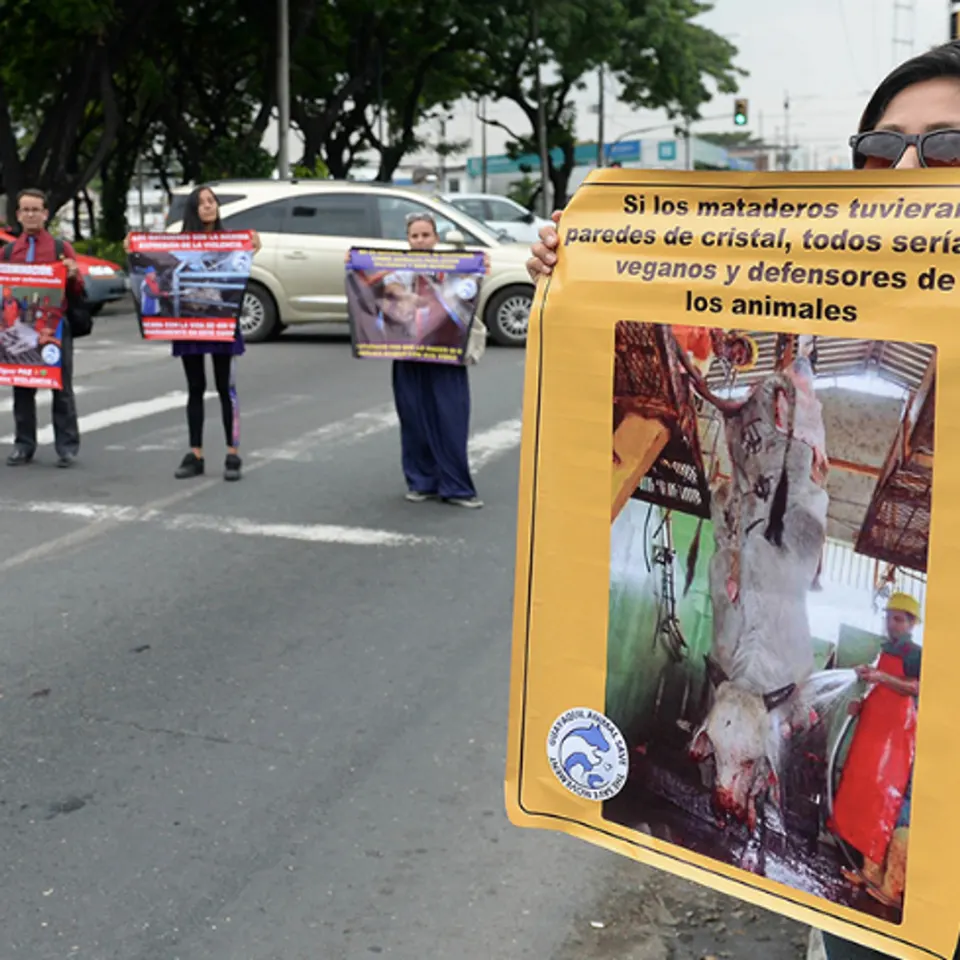
The principle of equality for the remaining animals is a logical extension of the principle of human equality.
We humans established our Charter of Human Rights based on the inalienable interests of each and every one of us, in accordance with the physical and chemical principles that govern our own existence. Looking at biology, we can determine that we have a nervous system capable of turning stimuli into experiences, a versatile complex that gives us a subjective view of the world and provides us with our own consciousness. This generality, expressed in terms of “human being,” is likewise applicable, in varying degrees, to all those creatures that possess a nervous system.
Traditionally and culturally, human beings have designated themselves superior to other beings for the mere fact of not being like us. To excuse our behavior toward them and so exclude them from any ethical view that might make us feel bad or guilty about our actions, we turned to various arbitrary and biased arguments. Most of the reasons given for human superiority lie in overvaluing and exalting our cognitive abilities. However, those who share this thinking did not (and do not) seem to notice that no quality classified as strictly human is present in all human individuals or appears spontaneously.
Scientifically, the differences found between Homo sapiens and other animal species are not of kind but of degree. Almost all the variables that make up living beings are continuous. Whenever we rely on variables of that nature (intelligence, memory, reasoning, etc.) we will inevitably fall into arbitrariness. Consequently, only a discrete (binary) variable could serve to separate specimens. If we move down from more “complex” organisms to less complex ones, we will discover that a key variable is the capacity to feel. This one you either have or you do not. We only have interests if we feel, and to have them a nervous system is required to channel and analyze the information that reaches us through the senses or through our own body.
We defend our interests in the form of “rights.” Given that we are not the only ones with interests, why do we deny other animals their rights (the defense of their interests)?
To date there has been very little progress in this direction, or it has not been approached as it should. For example, there is the so-called Great Ape Project, which defends extending and applying human rights to the primates most similar to us. However, this approach will not solve the problems of these very smart animals. Formal logic relies rigorously on analogy to test the consistency of an argument. To argue, then, that primates are “special” animals because of their intelligence inevitably creates another imaginary line between continuous, not discrete, variables. If we supposed that primates had an average IQ of 40 on the human scale and set the limit there between “animal with rights” and “animal without rights,” we would, as a result, be justifying and legitimizing the creation of other unreal barriers based on traits classified as human. If we separate according to continuous variables, we would be claiming by the same logic that, for example, human beings with an IQ of 150 should have more rights for having “more advanced and potentially developed traits” than “normal” people or people with intellectual disabilities, which is clearly false.
The legislation of the modern world classifies all nonhuman animals as “movable goods that move on their own” (objects with the capacity for autonomous movement). Legal rights separate three entities according to their relationship with the law itself. This is the basic archetype applicable to all nations:
Subject of rights (humans). It is divided in turn into moral agents (responsible for their actions) and moral patients (not aware of their actions). Both share an intrinsic right (inherent to the individual). They are, therefore, ends in themselves.
Object of rights (other animals): Their value lies in whatever value a subject of rights (a human) assigns to them. Their rights are extrinsic (dependent on others). They are, therefore, legally property and slaves of the human being: ends for the benefit of man.
Did the other animals perhaps appear on Earth with the sole purpose of satisfying us? Is there justice in this distinction? For both questions, no. Of course not.
With chilling frequency, welfarism is used to justify abuse. However, what is ethical or unethical does not lie in how bad or good the treatment behind the action is, but in the action itself. Take the case of an innocent man locked in prison, where we suppose he is treated wonderfully. No one in their right mind would argue that, given the good treatment, he should remain in jail. An innocent person should not be imprisoned. Well, all animals are innocent from the start, and only moral agents can stop being so by violating the rights of a third party.
Our reasoning allows us to tell good from evil and to build a life based on logic. If we truly consider ourselves the most cognitively advanced beings, it is our undeniable commitment to respect nature and free sentient creatures from the slavery into which we have plunged them.
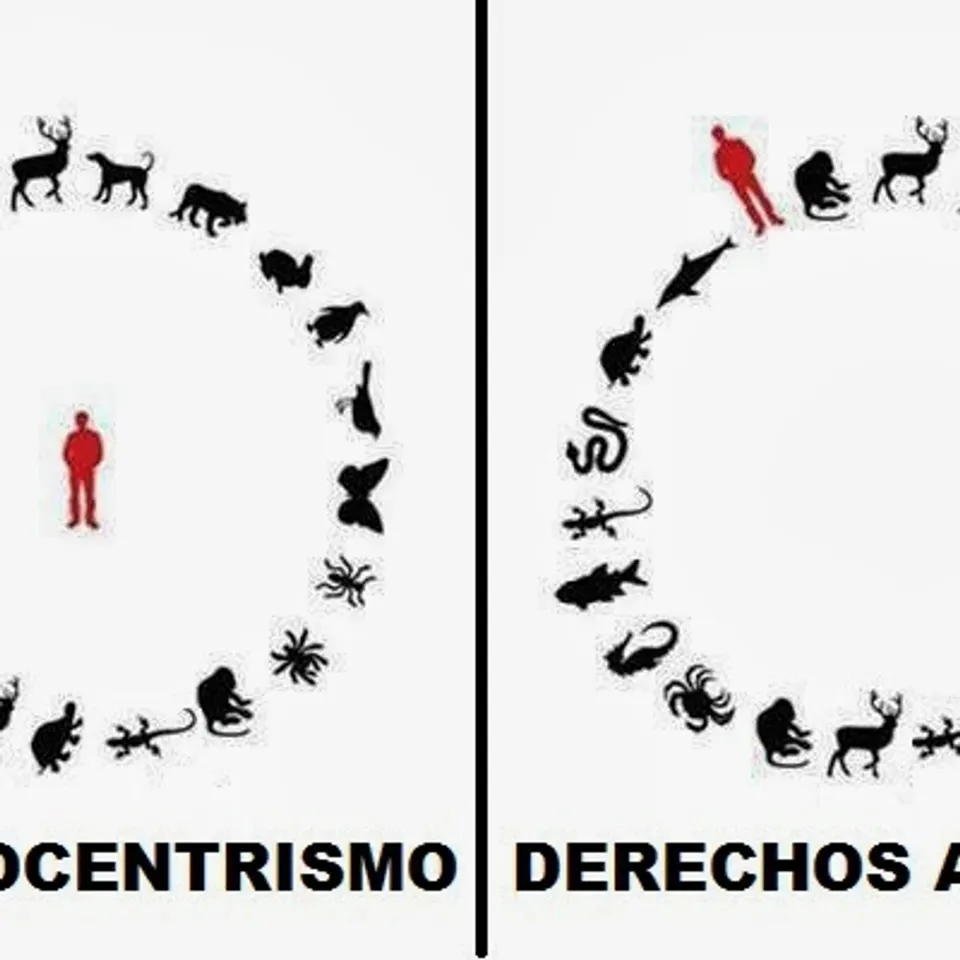
Let us admit once and for all that we have neither the criterion nor the moral legitimacy to keep exploiting the other animal species. We must move away from the anthropocentrism that has dominated us for thousands of years and accept the principle of equality (do not do to others what we would not want for ourselves) in defending the interests of all.
text: http://elguardiandeloscristales.com